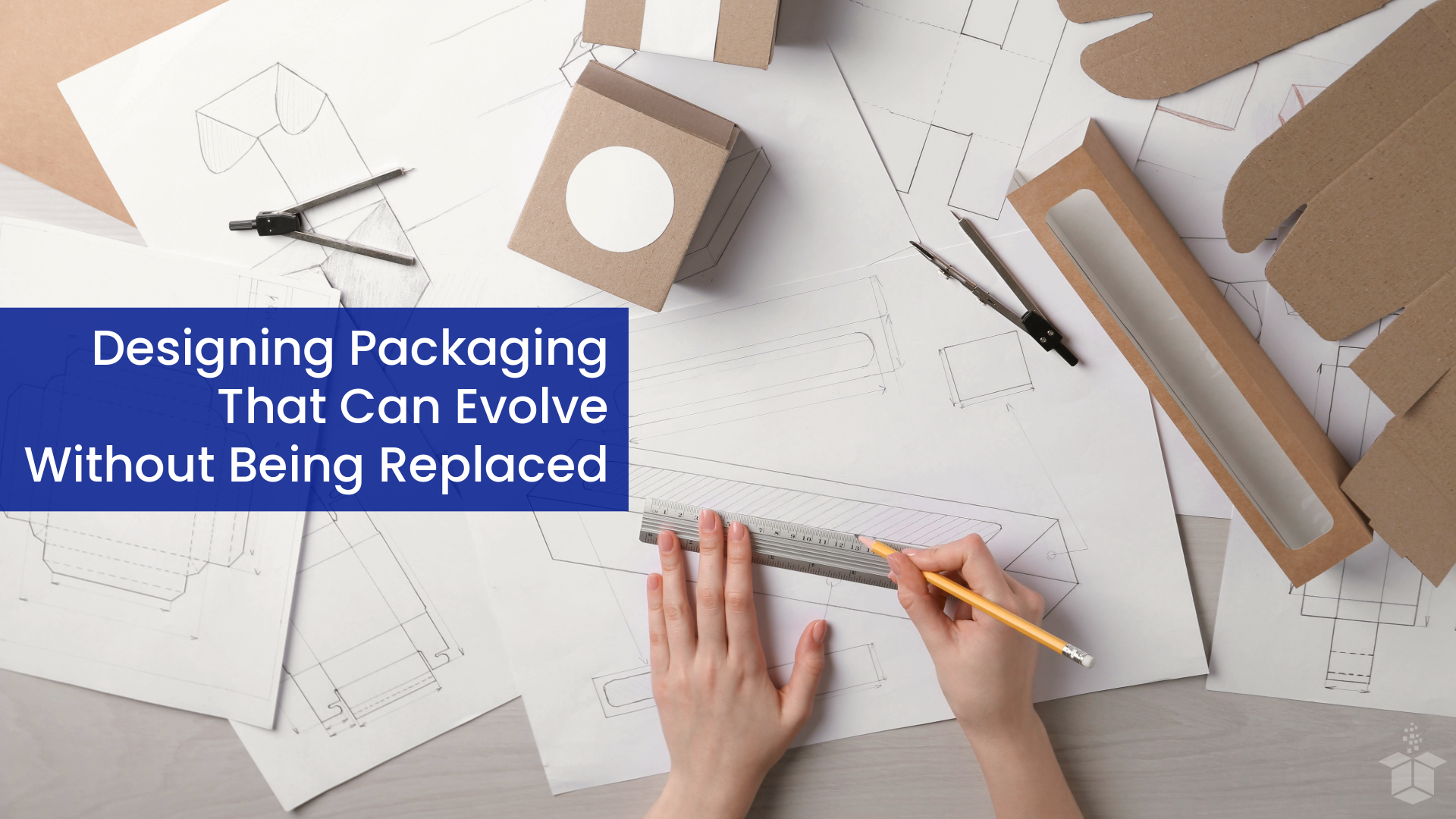
Designing Packaging That Can Evolve Without Being Replaced
Most brands don’t plan to replace their packaging every year.
It just… happens.
A logo refresh here. A regulatory update there. A new product line that suddenly doesn’t fit the old box.
Before you know it, pallets of perfectly usable packaging are sitting in a warehouse… or worse, headed to the landfill because the design couldn’t adapt.
The good news? Packaging doesn’t have to be disposable just because your brand evolves.
With smart upfront planning, brands can design packaging systems that last longer, adapt faster, and reduce waste, all without sacrificing creativity or impact.
Let’s break down how.
The Real Cost of “Starting Over” Packaging
Replacing packaging isn’t just a design problem. It’s a business problem.
When packaging can’t evolve, brands often face scrapped inventory due to outdated graphics or messaging, rush reprints to meet launch deadlines, higher per-unit costs from short production runs, brand inconsistency across channels, and increased waste that directly contradicts sustainability goals.
Most of the time, none of this is caused by bad design. It’s caused by packaging that was never built to change.
What “Evolvable Packaging” Actually Means
Evolvable packaging is not about being generic, minimal, or boring. It’s about intentional flexibility.
At its core, evolvable packaging treats packaging as a system rather than a one-time deliverable. It acknowledges that brands are living things and logos get refined, messaging shifts, regulations evolve, and product lines expand. Instead of fighting that reality, evolvable packaging plans for it.
This means the physical structure of the packaging is designed to last through multiple phases of the brand. It’s created to accommodate variation, not just the current moment. Meanwhile, the elements most likely to change, like branding, copy, compliance information, and campaigns, are placed in areas that can be updated without disrupting the entire package.
When done well, evolvable packaging allows brands to grow and adjust without paying a penalty every time something changes. The packaging stays relevant, usable, and aligned with the brand, even as the brand itself evolves.
Where Brands Often Go Wrong
Most brands don’t intentionally design waste into their packaging. It usually happens when decisions are made too narrowly or too quickly.
Packaging is often built around a single product moment without considering how fast things can change. Information that could easily live on a label or insert gets printed directly onto the structure. Custom sizes are locked in before product lines have fully stabilized. Visual impact is prioritized without fully accounting for fulfillment realities, logistics, or future expansion.
Another common issue is treating packaging as a finished task rather than an evolving system. Once it’s approved and ordered, it’s rarely revisited strategically… until something breaks. At that point, brands are forced into reactive decisions under time pressure, which leads to rushed reprints, excess waste, and higher costs.
These aren’t design failures. They’re planning gaps.
1. Update Visuals Without Scrapping Structures
One of the biggest mistakes brands make is tying everything together like structure, graphics, messaging, and branding into a single, inflexible design. When one element changes, the entire package becomes obsolete.

Separate Structure From Storytelling
Structural packaging should be designed to outlive campaigns, trends, and minor brand refreshes.
That means:
Neutral or minimally branded box styles
Structural designs that don’t rely on printed artwork to function
Sizes that accommodate product variations or future SKUs
Then, layer the storytelling on top.
Use Changeable Brand Elements
Instead of printing everything directly onto the box, consider elements that are easier (and cheaper) to update:
Pressure-sensitive labels
Sleeves or wraps
Inserts and cards
Stickers or seals
Custom tape
This approach allows brands to refresh visuals seasonally, test new messaging without full reprints, localize packaging for different markets, and update compliance information quickly, without throwing away perfectly good boxes.
Design With White Space on Purpose
White space isn’t just a design trend. It’s a strategic decision. Leaving intentional space for labels, stamps, regulatory icons, or variable data gives brands room to adapt without redesigning the entire package every time requirements change.
2. Design Packaging for Longevity (Not Just the Launch)
Launch packaging often gets the most attention. Longevity packaging is what actually carries the brand forward.

Avoid Over-Trendy Design Traps
Trends are fun, but they move fast.
Design choices that are heavily tied to a specific moment can make packaging feel dated quickly. That doesn’t mean avoiding personality; it means anchoring the design in brand fundamentals rather than fleeting aesthetics.
If a design would feel out of place on your website in two years, it may not belong on your core packaging.
Build a Modular Packaging System
Longevity improves when packaging is designed as a modular system.
For example:
One primary box size with multiple internal configurations
A consistent outer structure with swappable inserts
Shared components across product lines
This makes it easier to add new products, retire underperforming SKUs, and scale without redesigning everything. It also simplifies procurement and inventory management, which is an often-overlooked benefit.
Think Beyond the Product Itself
Packaging longevity isn’t just about fit. It’s also about how packaging performs in the real world.
If packaging is difficult to store, slow to assemble, or frustrating to pack, it’s far more likely to be replaced early, even if the design still looks good.
3. Reduce Waste Through Smart Upfront Planning
Sustainability isn’t only about materials. It’s about decisions. Many packaging waste issues stem from choices made long before production ever begins.
Right-Size Before You Brand
Branding should never be used to justify inefficient packaging.
Designing the structure first helps brands reduce excess material, lower shipping costs, improve pallet efficiency, and avoid relying on void fill as a workaround. Once the structure is optimized, branding becomes an enhancement and not a cover-up.

Plan for Change (Because It Will Happen)
Asking difficult questions early can prevent major waste later:
What happens if the logo changes?
What if regulations evolve?
What if a new SKU is introduced?
What if the brand expands into new markets?
Designing with these scenarios in mind keeps packaging usable even as circumstances shift.
Order Smarter, Not Just Smaller
Evolvable packaging allows brands to order larger quantities of long-life components while keeping changeable elements in smaller, flexible runs. This reduces emergency reorders, minimizes excess inventory, and stabilizes costs over time.
The Takeaway
Evolvable packaging isn’t about playing it safe. It’s about designing with intention.
When brands plan for evolution from the beginning, they gain flexibility instead of friction. Visuals can change, messaging can grow, and product lines can expand without scrapping structures that still work.
The best packaging doesn’t just look good today. It’s designed to keep working as your brand grows.