

Hot Mess or Heat-Ready? What Summer Really Does to Your Packaging
Summer is great for beach days, iced coffee, and longer evenings.
It’s… not so great for your packaging.
Because while your customers are soaking up the sun, your packaging is out there doing the same thing, sitting in delivery trucks, warehouses, mailboxes, and front porches, baking in temperatures that can easily climb past 120°F.
And here’s the problem: most packaging isn’t designed with that kind of heat in mind.
So the real question is: Is your packaging actually heat-ready or is it one hot day away from failure?
Let’s dig into what heat really does to packaging and what brands need to watch before summer turns into a logistics nightmare.
Heat Isn’t Just “Warm”… It’s a Stress Test
When temperatures rise, packaging doesn’t just get hot. It changes at a material level.
Adhesives soften. Films expand. Paper fibers lose stiffness. Inks become more reactive. Even rigid structures can start to shift under prolonged exposure. What makes this especially tricky is that heat damage isn’t always immediate… it can build over time, getting worse as a package moves through different environments.
A box might leave your facility in perfect condition, only to weaken after hours in a delivery truck, then degrade further sitting on a front porch in direct sunlight. By the time it’s opened, the failure feels like it just happened, but it’s actually been developing the entire journey.
Adhesives: The First Thing to Fail
Adhesives are often the most vulnerable component in your packaging system and the first to give out under heat.
Most adhesives are formulated with specific temperature thresholds. Once those thresholds are exceeded, performance starts to drop quickly. Bonds that felt strong during production can soften, shift, or completely release under sustained heat exposure.
Instead of holding firm, adhesives can become unpredictable, especially when combined with pressure, movement, or humidity during transit.
What this looks like in the real world:
Labels slowly lifting at the edges or sliding out of position
Cartons or mailers popping open before delivery
Tamper-evident seals losing their integrity
Adhesives transferring residue or becoming sticky to the touch
And because adhesive failure tends to happen gradually, brands often don’t catch it during testing, only after customers start noticing (… not good).
Inks & Printing: When Your Branding Starts to Melt
Your packaging design is one of the first things customers notice, but it’s also one of the most vulnerable to heat.
Inks and coatings can be highly sensitive to both temperature and UV exposure. When exposed to prolonged heat, certain formulations can soften, making them more prone to smudging, scuffing, or even transferring onto other surfaces. Add sunlight into the mix, and fading or color shifting becomes a real risk.
This is especially important for brands using bold colors, fine details, or specialty finishes. What looks crisp and premium in production can arrive looking worn, muted, or inconsistent.
Where issues tend to show up:
Printed graphics losing sharpness or appearing slightly blurred
Color vibrancy fading after sun exposure
Ink rubbing off onto hands, products, or inserts
Specialty finishes (like metallics or coatings) dulling or degrading
The result isn’t just cosmetic. It directly impacts perceived quality and brand trust.
Food Packaging: When Product Meets Physics
With food, heat doesn’t just affect the packaging. It directly affects what’s inside.
Temperature fluctuations can change the physical state of products, accelerate spoilage, and create moisture issues within sealed environments. Even small increases in temperature can have a noticeable impact, especially over extended transit times.
This is where packaging becomes more than just a container. It’s now a protective system. And if that system isn’t designed to handle heat, it can’t do its job effectively.
Common heat-related challenges include:
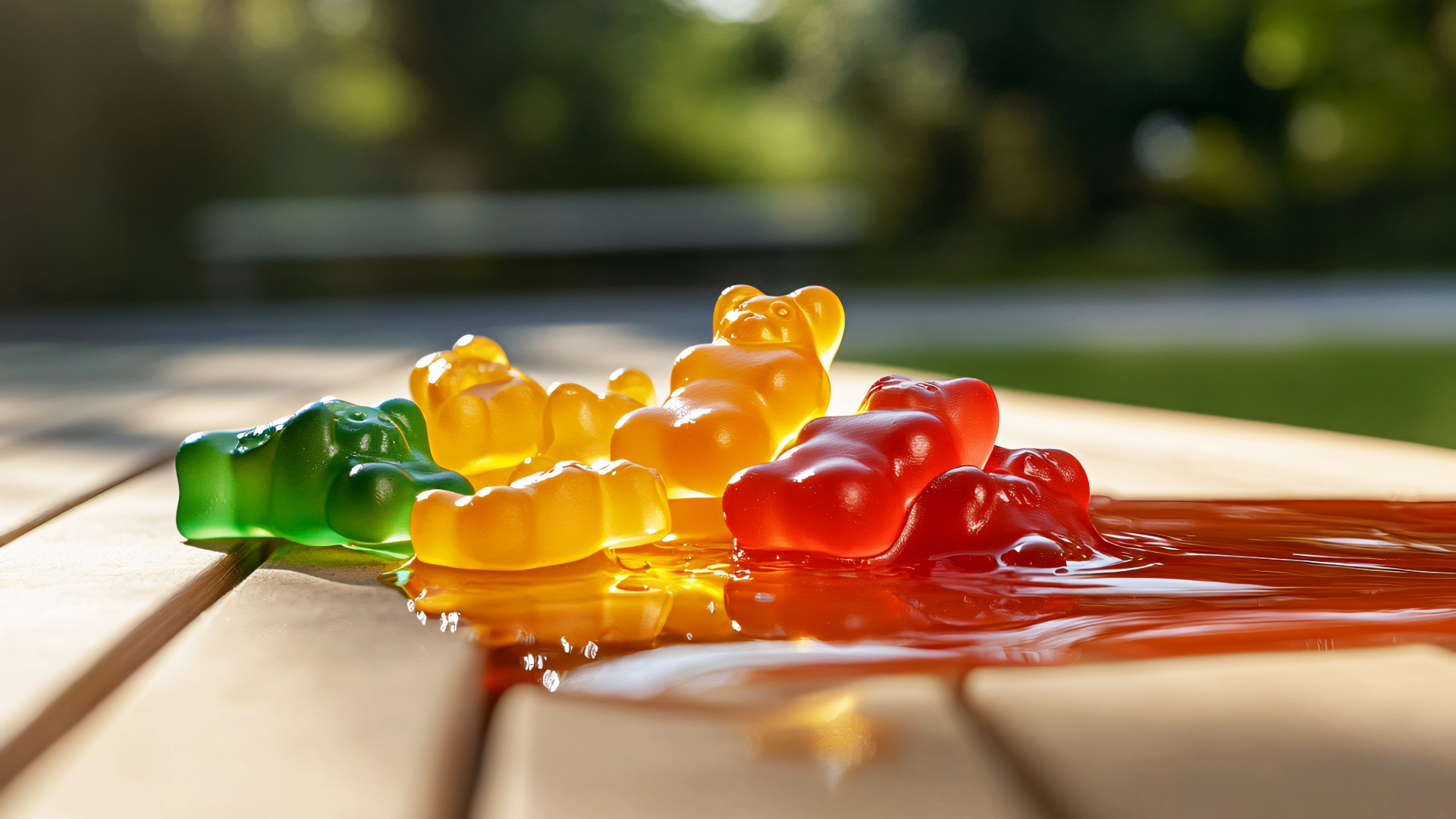
Products melting, softening, or losing shape (That stunning candy your team worked so hard on? Mush.)
Condensation forming inside packaging, affecting texture and shelf life (also kind of gross to open)
Barrier materials losing effectiveness, allowing moisture or air transfer
Structural packaging weakening, offering less protection overall
And from the customer’s perspective, none of this is separated out. A melted product isn’t a “shipping issue.” It’s now a brand issue, and you definitely do not want to have it. Because with how fast people can spread information on social media, those 100s, if not 1,000s, of people who wanted to buy your product are probably going to rethink that choice.
Cosmetics & Personal Care: Subtle Damage, Big Impact
Cosmetics and personal care products are particularly sensitive because their quality is tied so closely to texture, consistency, and experience.
Heat can quietly alter formulations, causing separation, thinning, thickening, or changes in how a product applies. At the same time, packaging components are expanding and shifting, which can create pressure inside containers.
That combination often leads to small failures that feel big to the customer.
Where heat tends to cause problems:
Products separating or changing consistency
Containers warping or becoming misshapen (so much for that pretty unboxing video)
Closures loosening, leading to leaks or spills
Labels wrinkling, bubbling, or peeling away
Even when the product is still technically usable, the experience feels off, and that’s often enough to trigger returns or negative reviews.
Structural Packaging: When Boxes Give Up
Outer packaging doesn’t get a free pass either.
Corrugated boxes and folding cartons are heavily influenced by their environment, especially when heat and humidity are combined. Paper-based materials naturally absorb moisture from the air, which can weaken their structure over time.
Add heat into the mix, and that loss of strength becomes even more pronounced.
What starts as a sturdy, well-designed box can gradually lose its ability to protect what’s inside, especially during stacking, transit, or long dwell times.
Signs of heat-related structural stress:
Boxes bowing, warping, or losing their shape
Corners softening or collapsing under pressure
Reduced stacking strength during shipping or storage
Increased product damage due to weakened protection
For brands that have already optimized packaging to reduce material use, this can be the tipping point between efficiency and failure.
Designing for the Heat (and Where Brands Slip)
The biggest misconception about summer packaging is that it’s just about temperature.
In reality, it’s about exposure over time. You can’t change the temperature. BUT you can make your packaging last longer.
Your packaging isn’t sitting in one controlled environment. It’s moving through a chain of unpredictable conditions. A few hours in a hot truck, followed by time in a warehouse, followed by direct sunlight on a front porch. These all add up.
That repeated exposure is what causes materials to break down.
And this is where many brands fall short. Packaging is often tested in ideal conditions, approved, and then left unchanged as seasons shift. But heat-ready packaging is about designing for those real-world conditions from the start. You have to be realistic about what your packaging COULD go through. You might ship from a cool and mild climate. But if you are shipping to Florida? You have to take the intense heat and humidity into account.
What that looks like in practice:
Using adhesives specifically rated for higher temperature ranges
Selecting inks and coatings that resist heat and UV exposure
Designing with expansion, pressure, and transit time in mind
Incorporating insulation or barrier layers when needed
Testing packaging under actual summer conditions… not just controlled ones. Consider every location you could be shipping to.
Packaging doesn’t fail in perfect conditions. It fails under the conditions you didn't prepare it for.
The Bottom Line
Packaging isn’t static. It reacts. To temperature. To time. To the environment. And summer is one of the toughest tests it will face.
Brands that treat packaging as a fixed asset often find themselves reacting to problems after they happen. They have to process returns and refunds. Find packaging on the fly that just does not look good. It’s not a fun time being reactive.
And if you aren’t prepared? By the time you find out something went wrong… your customer already has.
Because when packaging fails, it becomes a customer experience issue. And customer experiences can either make or break you.
The brands that think ahead, who design for heat, movement, and real-world conditions, are the ones that avoid those problems altogether and create customer experiences that keep them coming back for more.